
About the author

Showing posts with label social. Show all posts
Do athletes deserve high rates of pay?
 |
| Money Mayweather - is he worth it? (photo from the Mirror) |
This year, according to Forbes list of highest paid
athletes, Floyd Mayweather’s earnings from both his salary and sponsors will be
$300 million. Messi will earn $73.8 million, Federer $67 million, Hamilton $39
million and Bolt $21 million. All of these men are unbelievable athletes who
put in, and have put in, hours of hard work and dedication to become some of
the best in their respective sports, but do they really deserve or need that
much money for what they’ve achieved?
If we compare Mayweather’s salary, $285 million, to the
salary of an average London tube driver, $76,000, or to an average NHS doctor,
$107,075, or to an average police officer in the UK, $40,502, then we
definitely see a massive inequality. But these statistics aren’t the whole
story, considering Mayweather is not an ‘average’ boxer, he’s regarded as the
best – hence the pay, so comparing him to the ‘average’ of other jobs seems
unfair. If we instead compare him to the best/most highly paid of the same
three jobs; $92,673, $156,696 and $83,210 respectively, then we get a more fair
perspective on the salary differences. Per year, for beating someone up in a ring,
which he barely does anyway with such a defensive game, and for all his
training and hard work, Mayweather’s salary is 1,819 times that of the most
highly paid doctors in the UK.
Returning to the average salaries for a moment, the average
weekly pay in the Premier League is £25,000 per week, which means the average
salary is around £1,050,000 when you take the length of the league and off
season pay into account. A highly paid NHS doctor earns £69,325 per year – less
than the footballer makes in 3 weeks.
So the question that needs to be answered before we can
decide whether athletes deserve their high rates of pay is ‘what is worth
paying for?’
Let’s assume pay is based on how hard people work;
Mayweather is renowned for being an unbelievably hard worker – commentators on
boxing suggest it is this factor which has kept him at the top for so long.
According to his training, he trains between 8-10 hours a day on the weeks
leading up to a fight, slightly less when just training normally, but it must
be said the actual training he does looks disgustingly difficult for the mere
mortal – he definitely works incredibly hard. Similarly, the average GP will work
a 9-10 hour working day, however the work does not appear quite as physically
strenuous as Floyd’s training. From this it might be plausible to argue that an
athlete may deserve a high rate of pay because of how hard they have to work to
be in their positions.
If we follow this line of debate however and presume that
athletes have exceptional workloads, the argument fails when you compare
athletes’ pay to each other’s. Both Serena Williams and Novak Djokovic are
number 1 for women’s and men’s tennis, yet Djokovic brings in $48.2 million a
year while Williams only gets $24.6 million. Both players have a large point
margin over second place, and it’s safe to assume that they have similar
training regimes being tennis players, and yet Djokovic earns more than $20
million more – how is this fair? Similarly, as Djokovic is number 1 in tennis
we can compare him to the number 1 in a different sport such as athletics;
Bolt, despite a horrendously tough training regime, earns a measly $21 million
– all of that money comes from sponsorships as his salary is absolute $0,
whereas Djokovic’s salary comes to $17.2 million. As someone who has done
sprinting training at a BUCS level, and loves playing tennis too, I can
honestly tell you that athletics training is brutal on the body. So if we’re
suggesting that they deserve their pay because of how hard they work, there
needs to be a severe overhaul of which sports get the highest pay.
We can’t even remedy this issue based on how good they are
at their jobs – if people are paid fairly based on how good they are at their
individual jobs, then the top in every sport should be paid similarly, as
should the average, as should those in non-sport jobs.
If we instead base the pay on how important they are for
society as a whole, the debate becomes a little more heated and convoluted. It
can be argued that professional sport has a positive impact on society;
sportspeople, who aren’t getting in trouble all the time, can be regarded as
good role models; sports events are good for local economies, pubs putting on
matches for example, as well as for simply giving people something to look forward
to and to socialise around; they provide a window in which we can define morals
and ethics to all of society, bettering issues of racism, sexism, homophobia
and the likes. It would be foolish to argue that professional sports are
completely useless to society.
However, doctors save lives on a daily basis, rubbish
collectors ensure we have clean streets – if they go on strike at any point
then we’ll all be screwed, police ensure we have a society in which we can feel
safe, even politicians do important work for society sometimes. It might also
be foolish then to suggest that professional sports are 1,819 times more
important for society than those who make society work outside of sports, and
allow for a society in which professional sports can exist.
Long Live Southbank: Long Live Skateboarding
 |
| The glorious Southbank. (Photo from llsb.com) |
One year ago today I wrote a blog outlining my arguments backing the Long Live Southbank campaign, which I think makes this a pretty good time to review its progress. (You can read that article here: http://www.thisisnotablog.org/2013/12/LongLiveSouthbank.html)
To put it briefly, the campaign was a massive success.
September this year saw this statement put out on the LLSB website:
Following talks that have taken place over the last three months, Long Live Southbank and Southbank Centre are delighted to have reached an agreement that secures the Queen Elizabeth Hall undercroft as the long-term home of British skateboarding and the other urban activities for which it is famous.The agreement has been formalised in a binding planning agreement with Lambeth Council. In the agreement, Southbank Centre agrees to keep the undercroft open for use without charge for skateboarding, BMX riding, street writing and other urban activities.On the basis of the protections secured by the planning agreement, Southbank Centre and Long Live Southbank have withdrawn their respective legal actions in relation to the undercroft. These include Southbank Centre’s challenge to the registration of the undercroft as an asset of community value, Long Live Southbank’s application for village green status for the undercroft, and a judicial review of Lambeth Council’s decision to reject the village green application.Long Live Southbank is pleased to support Southbank Centre’s Festival Wing project for the improvement of the Queen Elizabeth Hall, Purcell Room and Hayward Gallery, on the basis that the plans will now no longer include any redevelopment within the skate area of the Queen Elizabeth Hall undercroft.Cllr Lib Peck, Leader of Lambeth Council said; “I’m pleased that Lambeth Council was able to work with both sides and find an imaginative solution to resolve this. Shared public space in London is precious and Southbank Centre is a great asset to the country’s cultural life. This agreement is a sensible way of protecting both and we can all now look forward.”
To me, this appears to be an agreement based wholly on
LLSB’s terms, which were, in my opinion, the only acceptable terms to agree on.
The lack of compromise displays the triumph of the campaign; had there been,
for example, a clause suggesting we would have to pay for entry to undercroft,
or that street art was no longer permitted, or any other limitations or
exclusions, the extent of its success would be capped.
The organisation and leadership of the campaign must be
applauded for professionally and effectively directing LLSB, as without them
this success wouldn’t have been possible. It is easy to see campaigns such as
the ‘Occupy’ movement falter with a lack of effective organisation and
direction, remaining in history as idealistic movements with no real success or
solidification. LLSB’s leadership never lost sight of the target, thus effectively
mobilised the membership in the right direction, displaying the professionalism
of an interest group far more established.
In addition to this, the campaign was professional in
regards to its media and PR. Having watched plenty of the LLSB videos on YouTube,
purchased LLSB merchandise from the website and followed the Facebook and
Twitter, I for one commend those who played a role in all of these areas. The
videos are of a high standard, and gave a sense of legitimacy to the campaign,
as did the posts on social media, which displayed utmost decorum; perfect for
PR. Even the merchandise was of satisfactory quality; the whole production of
LLSB was enough to give it a high level of legitimacy.
Long Live
Skateboarding.
So, less brown-nosing of the LLSB campaign, more ranting.
In May this year, Norwich City Council proposed a ban on
skateboarding in the city centre, vilifying those who take part in the pursuit,
claiming that it causes extensive damage to public property and is a
‘nuisance’.
Their ignorance amazes me.
Firstly, whether skateboarding is a hobby, an interest, a
way of life or whatever for those who do it, it is always an expression of
oneself, and a source of fun for more than 11 million people worldwide. It is
certainly not an example of ‘anti-social behaviour’. If anything, it is the
total opposite; skateboarding, as with other pursuits, brings people together
and gives people the opportunity to socialise, make friends who share their
passion, and progress with their art together. It does not endanger the general
public (barring any horrifically unfortunate, unlikely events), and does not
aim to do so; skaters tend to want to enjoy skating, not causing havoc.
Secondly, skateboarding does not misuse public property. The
term ‘public property’ directly implies that property is owned by the people,
thus the people have the option to utilise it as they so please. For example, the
existence of a rail does not have an explicit suggestion that it must be used
as an aid for people to walk up a staircase, in fact people may wish to slide
down rails on their backsides, or balance on it for the purposes of parkour, or
ultimately grind on it with their skateboards. It takes those with creativity
to see the rail as more than just the stair-climbing aid it was designed as; why
should we perceive creativity as a criminal offence? (So long as it doesn’t actually
hurt people, of course). Can it not be said that creativity is what gives us an
interesting, diverse society? Banning skateboarding because it scratches a park
bench or a rail outside a shop or a ledge on a bed of flowers is a gross
overreaction. Any possible minor damages to such are a small price to pay to
have a community of people both young and old enjoying the same pastime
together. In fact, the art of skateboarding attracts far more viewers than any
railing would on its own; the amount of times I’ve seen crowds of people
watching as skaters utilise public property in an interesting way certainly
evidences this. Not everyone is like this guy:
And that’s pretty much how Norwich City Council looks to me. As if they’re saying ‘SKATEBOARDING IS BAD BECAUSE IT JUST IS SO THERE’, as if participating in a primary school playground argument.
Leading on from this, my final point. Skateboarding is the
total opposite of a nuisance, as I think has already been implied in this
article. It is a well-respected, established sport with a huge following. One
of the leading arguments I made for the LLSB campaign was that undercroft is a
cultural hub for thousands of people; skateboarding itself is that culture. It
adds to a diverse society of interests, allowing for people to see the world as
they want to see it. But more practically than that, it’s a well-known
expression used by officials that they wish to ‘keep young people occupied’ and
stop them from ‘hanging around on street corners’ and the likes; in order to
have a mobilised, occupied youth, there has to be the opportunity for young
people to actually enjoy themselves and do things to pass the time, and
skateboarding is certainly one of them. By taking away more and more pastimes
for young people, you leave them with less and less options for enjoyment. So rather
than seeing it as a nuisance, see it as a great way of giving young people an
opportunity to enjoy themselves, and a way to educate people in the importance
of being able to have fun, or in the importance of bettering themselves in
whichever pursuits they wish to take part in. I would argue that if Norwich
City Council make skating a criminal offence, they are setting a terrible precedent
of anti-enjoyment; one which suggests that harmlessly pursuing a hobby is a ‘nuisance’
to society as a whole. In fact, the majority of times I’ve come into contact
with skaters on the street, they have politely allowed people to pass to ensure
it is safe before they continue, and so as to not impact other people’s days.
So to sum up, Norwich City Council: by making skateboarding
a criminal offence, you devalue enjoyment in our society, when compared with
the well-being of a few rails.
And all this coming from someone who doesn’t even skate.
None of the above: why it’s a good idea
 |
| My own take on a real ballot paper. (You can find it full-size on the Facebook page) |
Turnout in May 2014 local council elections: 35.7%
Turnout in London Mayoral elections 2012: 31.0%
Turnout in UK Parliamentary elections 2010: 65.1%
(Courtesy of electoralcommission.org)
Turnout in 2013 Australian general election: 93.23% (usually
fluctuates between 96% and 93%)
And yet they call us a ‘representative democracy’. From the
figures we see above, the government is currently only representative of 65.1%
of the public (I personally believe it’s representative of 0% of the public,
considering no one voted for a coalition, but that’s another blog…), with local
councils being even worse. However this is not wholly their fault, in fact the
worst part is it’s technically the fault of the public – officials in power
simply capitalise on whatever support they get, and take it as their
sovereignty.
It is unfair to compare turnout rates in the UK to turnout
rates in Australia, predominantly due to Australia’s system of compulsory
voting; if you don’t vote you are asked to give a reason why, and if the reason
is deemed insufficient you may be fined up to $170 – quite a good way to whip
people into voting. However the most important part of this system of voting is
the inclusion of a ‘none of the above’ option. This gives the public who are
not enticed by any party standing in the election, or those who are adverse to
the concept of sovereign rule completely to express their views without having
to spoil their ballots, protest vote, or simply not turn up.
The inclusion of both compulsory voting and the ‘none of the
above’ option would increase participation in elections in the UK
substantially, and hopefully (as a by-product) increase interest and knowledge
in politics. Most importantly, it would make our democracy that we clutch so
dearly to work slightly better – no longer would people who hadn’t turned out
to vote, yet still insist on critiquing the government because of stories they’ve
heard from the media of which they actually have no idea about, be accused by
people like me of having invalid arguments because they didn’t actually try to
impact the election that put the government they so hate into power in the
first place. (Of course, people like me would still accuse them of having
little knowledge of the things they are pretending to be experts in, thus their
arguments remain invalid, but hopefully having compulsory voting might entice
people to actually take an active interest in politics). And governments might
actually be able to call themselves sovereign, or accountable, due to the
almost total participation of everyone making a decision on what they want.
However, I would take the ‘none of the above’ option
slightly further, and treat it as if it were an actual candidate. If the option
has the most support in a constituency (in a general election), that
constituency would be subject to another election, until a winner other than ‘none
of the above’ was found. Hopefully, this would help parties to make better
policy and actually try to win people’s opinion with substantiated manifestos,
while actually interesting people in politics slightly more; I’m quite certain
people would not enjoy continuous compulsory elections due to a consistent ‘none
of the above’ victory, so rather than paddling in disillusionment, maybe the
public would take an interest – alongside the changing of party policy to
better represent their wants and needs, people may actually start to vote
rationally.
Of course, this view is very idealistic, and I’m sure in
practice there would be far more difficulties in implementing it, or people
simply wouldn’t behave in the way I would hope for them to in my head (the
beauty of political science is you never can really precisely predict an outcome,
and the beauty of that is that no one can ever tell you that your prediction is
wrong (until it happens) because, without it actually happening there is no
perfect precedent to go on), however in my opinion it would be a step towards a
more representative government within our representative democracy, as well as
a step towards educating the public on politics and the issues surrounding it.
(Note again: I asked Richard Harrington (MP for Watford) what his views were on 'none of the above' and he stated that he agreed with it completely, as the participation of everyone in politics is utterly vital (or words to that effect.))
What is the ‘perfect politician’?
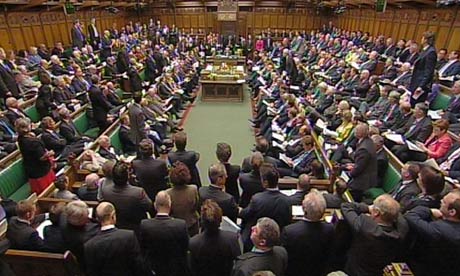 |
| A room of hated people. |
Throughout the ages, the most hated people have undoubtedly
been politicians. From Hitler to Obama, not one of them has gone without
hateful cartoons, widespread discontent, and general dislike. This has led me
to wonder, what is the perfect politician? What would his/her traits be? What
would their life story be? Having studied people’s likes and dislikes of both
humans and politicians, I’ve created a list of a few of the main features this
‘perfect politician’ would need (I’m sure I’ve missed out plenty of other
massively important traits, but this is at least a foundation).
1) They must be charming, charismatic and
interesting
Probably one of the most important features of the perfect
politician. By being charming and charismatic, they can pretty much forget
about the other important features, as they can hide the majority of their
mistakes and short-fallings behind a façade of schmoozing and flirting. I’m
pretty sure if Will Smith was a politician, his smooth, charismatic side would
be more than enough to hide any public disgrace or political corruption. What
I’m basically saying is people like Ed Miliband, David Cameron and Nick Clegg
are not quite at that standard. Obama’s not doing too badly though, the
majority of people outside America seem to believe he’s some kind of charm
idol.
2) Alongside charm, being physically attractive
It hasn’t been a
major factor, but people generally like and react better to things that are
aesthetically pleasing, I believe politicians are no different. For example,
Paul Ryan (Mitt Romney's running mate for the 2012 election) and his fan club of crazy young women, it’s no wonder the first
suggestion on Google images is this:

3) Must be around the pre-middle-aged stage
If a politician is too old, they’re considered ‘out of
touch’ by the younger generations, and yet if they’re too young they’re in
prime position to be called a ‘career politician’ or simply just be too
inexperienced to the older generations. The whole concept of age in politics is
a grey area; an area with no clear middle-ground, so I’d suggest the mid-30s as
a fair compromise for both.
4) Has worked a job in every single damned sector of employment
Including retail, catering, business, accounting, law,
authorities, arts, sport, cleaning, public services, and all the other possible
career paths. This would create a politician with no chance of being named a
career politician (although they may not be able to keep a job), and one with some
form of experience in everyone’s career, maybe even some expertise in one or
two. Their empathy would increase tenfold.
5) Perfect example of social mobility
Their preferable life story would be: Born into low income
family on benefits in council housing, somewhere surrounded by different
cultures of equally poor families, gaining understanding of everyone’s
situation by childhood friendships. Going to a low-achieving secondary school
but still achieving highly, gaining at least 3As at A2, and going to a
respectable university (but not Oxbridge, all politicians are Oxbridge). Doing
well at university and leaving with a masters, and getting a job (in every
sector mentioned in the previous point) while leading a middle class life.
Becomes a politician and hits the elite life, but still has empathy for all the
other classes. Basically they need to have this as their theme tune (just with
less explicit language, and less dick-headed-ness):
(for the iPad/iPhone users that can't see this: click here)
6) Huge racial diversity
Not only will they have had to be brought up around multiple
cultures, to cater to as many people as possible they should have mixed raced
parents, preferably with some Asian, White, Black and Oriental, to be able to
really connect with the electorate. It’s the only way.
7) Of course, not allowed any opinions that disagree with
anyone else’s
Like Jim Carrey in ‘Yes Man’, the perfect politician should
be able to please every opinion by saying yes to everyone’s opinions, even with
contradictions. When the rich ask for less tax, and the poor ask for more
taxing of the rich, they have to be able to say yes to both, somehow. Of
course, that will become much easier if they’re charming and smooth, as
mentioned in point 1.
Basically what I’m trying to say is that the perfect
politician is non-existent; impossible; there will never be one that everyone
likes (or at least that everyone agrees with) simply due to the diversity of
people and their opinions around the world. And without the perfect political
model, it’s difficult for politicians to even gain a majority of people
actually liking them. Maybe hatred just comes in the job description.
Long Live Southbank: Long live culture
 |
| Beauty in culture. Image from: covanaut.com |
If you haven’t already heard, one of the most culturally and
historically important areas of London is in danger. Undercroft has been a home
for skaters since 1973, and is the oldest-surviving skate spot in the world.
Generation after generation of skaters and BMXers alike have used Undercroft
for social and recreational activities, and most importantly as a free
(perfect) spot to ride/skate. All year round it attracts crowds of people, as
well as professional skaters, artists and the likes. It is a hub for ageless
activity, and unites generations under one mutual love – my dad skated it as a teen,
and now it’s my turn. It buzzes with culture and history, and has symbolic
meaning to both the skate industry and skateboarding in Britain as a whole.
And yet, the Southbank centre (that sits above Undercroft) is
trying to get rid of it. They wish to replace it with shops similar to those
that can be seen either side of Undercroft:
 |
| Image from: www.walklondon.com |
They have offered to build a new skatepark further down
Southbank as a replacement and as an attempt to ‘appease’ the skaters, and
claim that the new shops will increase the cultural wealth of the area; that
they are not ‘disregarding their skaters’.
BS, rubbish, tripe, whatever you want to call it, it’s
shocking, and I shall attempt to explain why.
Firstly, the new shops - they are not going to increase the
cultural wealth of the area, and Southbank centre knows this. More shops will
simply add slightly more to the already bulging pockets of the Southbank Centre
and its management, while wholly extinguishing the real culture that literally
lies beneath them. We live in a multicultural society full of differences, and
yet big business constantly tries to make everything monotonous, simple and
faceless – and this is just another example of it. It’s as if Southbank is
succumbing to the robotic, cultureless businessmen who care more about the
amount of money in their bank account than their own lives, when Southbank is
supposed to be a pinnacle of culture and expression in London. Southbank (and
London as a whole) is full of shops and cafes, and you’re spoiled for choice of
them just a few meters away from Undercroft, why would we need anymore? Have we
really become so consumerist in our society that we need more food options than
just the Southbank Centre restaurant, Giraffe, Eat, Wagamama, Strada, YO!
Sushi, Wahaca, Las Iguanas, Le Pain Quotidien, Caffè Vergnano 1882, Feng Sushi,
Ping Pong, the Cafe in the Queen Elizabeth Hall Foyer, Skylon, Riverside
Terrace Café, Central Bar, Canteen and Concrete – to name a few? All of which
are within the same small section of the Southbank? The Southbank Centre
website says it itself:
"If you're looking for a place to stop for refreshment while visiting Southbank Centre, you're spoilt for choice." - www.southbankcentre.co.uk
 |
| Image from: www.standard.co.uk |
Looks great, doesn’t it? But a message to the Southbank
Centre: no one who has loved and cared for Undercroft will use it. The vast
majority of skaters and BMXers who actually care about the cause won’t even
touch it. Little kids who know no better, and those who have nowhere better to
go might use it every so often, but a 70,000 strong petition of people will not
be using it. What the new skatepark would represent is the death of culture,
the death of values and most importantly is a complete insult to everything
Undercroft represents. It would represent the disregarding of thousands of
people’s views to make way for more moneymaking rubbish that no one will share
a relationship with and will mean nothing to anyone, other than ‘just another
coffee shop’ or ‘just another stationary store’. The Southbank Centre is not
dangling a carrot in front of a donkey, it’s dangling faeces sprayed with
deodorant. By the creation of this new skatepark, you will royally anger
thousands of people, and probably lose thousands of potential customers.
Moving Undercroft is like moving Britain’s traditional beverage
from tea to coffee – it’s just not supposed to happen, and if it did, people would
refuse coffee out of spite.
But the changes don’t just affect the skatepark. They will
affect the music halls, the art halls and the other areas of Southbank that are
of upmost importance to people. Even parkour will be affected. It just appears
that the Southbank Centre is suggesting that the gargantuan number of people
who actually use the centre for its cultural worth are wrong, and are clearly
not as intellectual/enlightened as the centre management which obviously knows
best when it comes to culture.
As a final major point, in recent years there has been
apathy and disillusionment amongst young people when it comes to politics. Nick
Clegg failed us, David Cameron pretends to care about us, and party politics
has seen a decline in real interest. However, now a movement turns up in which
thousands of young people become politically active, lobbying local MPs, Boris
Johnson and other decision makers, and yet it’s being shunned into the ground
by the Southbank Centre and its unwilling-to-cooperate-in-the-slightest
management. If the Southbank Centre gets a new face, it will be yet another
reason for political apathy and hatred by young people, as clearly nothing we
actually care about matters to those in positions of power. I would suggest
that the Long Live Southbank campaign goes further than just Southbank, it is a
beacon of hope for young people and a symbol of political activism. The centre
gets changed, and a whole load of young people lose their interest in the
system that has once again failed them.
Today Southbank closed Undercroft for ‘maintenance’, despite
LLSB bringing in experts and structural engineers who have suggested nothing
needs maintaining, the lights just need fixing. Undercroft is clearly in peril,
and needs saving ASAP.
"Southbank Centre passionately believes the arts have the power to transform lives. We also believe that the arts must be available to all of us – and this lies at the heart of all we do." - www.southbankcentre.co.uk

Here's a great video from the LLSB YouTube channel, explaining the dire situation:
(For the iPhone/iPad users that can't see this: http://www.youtube.com/watch?v=iFaKN98Xg3E)
You can find LLSB at: http://www.llsb.com/
"Construction WITHOUT destruction." - Long Live Southbank
Why doesn't Britain care about the Prime Minister?
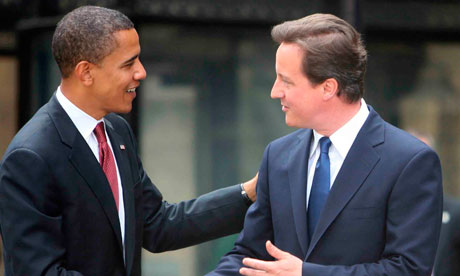 |
| One has the majority of a continent behind him, the other is wearing a blue tie. |
To me this seems completely alien. Actually having genuine, caring feelings for whoever happens to be in power? Feeling so strongly about his death that the entire nation is affected as if a close friend had died?
In Britain the PM would be lucky to be missed by his own family, let alone the entire nation.
This led me to beg the question: 'why don't we care about our PM while the Americans care so much about the President?'
Despite their constant complaining about governmental interference, Americans are still depicted as a nation behind the President, due to the symbolic nature a President has. Whether a Presidential supporter or hater, Americans are stereotypically tremendously patriotic to what appears to be an almost ignorant degree, and will therefore stand behind the flag to defend their country from criticism regardless of their political standpoint (this is just a general stereotype, obviously). Because of this, the President takes on a role as figurehead of the nation, and is expected to impose American values on the world. By killing the President, you kill the possessor of America's ideals, the enforcer of the constitution, and the bearer of US supremacy/power.
By killing the Prime Minister of England, you kill another bloke who happened to get more votes than the other bloke.
In England we barely know ourselves, we don't have time to create particularly empowering stereotypes or hang our flag from everything we own. Our patriotism is one that is ever present, but hidden due to our own personal complexity. Therefore to the world we're a nation of tea and biscuits, fish and chips, and posh men in top hats discussing the weather on penny farthings. If that's all Cameron really has to embody, then it's no wonder we wouldn't shed a tear if he were to die unexpectedly. In our own nonchalant manner we would simply expect the next 'bloke' to do a better job of representing our stereotype, and suggest it might be beneficial for him that he try not to get himself killed while doing so.
However, I would argue that the stereotype I suggested is both embodied and furthered by a far greater symbol than the PM, thus leading to our lack of interest in his (or her) well-being.
The Queen is everything I stated previously, and some. She has the upper class, posh, tea-and-biscuits look, but also depicts a strong Britain - one with an Empire that once struck both fear and joy into the hearts of countless people of different nationalities. Her symbolic importance is so huge, I would argue that it is beyond that of the President.
If the Queen was assassinated tomorrow, the whole world would shake. It pretty much did after Princess Diana died.
But back to the PM. Another issue that British Prime Ministers have is that they're never particularly interesting, charismatic or fun people. Cameron, Blair and Brown are blown totally out of the water by the likes of Obama, Reagan and JFK. America is great at having strong, personable leaders that manage to form relationships with everyone, simply due to their own personal qualities. Just listen to Obama sing, can you imagine Cameron doing this?:
(For iPhone/iPad users: http://www.youtube.com/watch?v=y6uHR90Sq6k)
And even if he tried, he would never be able to pull it off with the charisma and charm that Obama seems to excrete. Just look at the smile Barack pulls after he sings - enough to drag a nation into another 4 years.
So because of the PM's lacking abilities in the field of charisma, we are unable to form the relationship that Americans are able to form with Obama. I wouldn't be surprised if most Britons were more interested in Obama than Cameron on a solely personal level - I know I am.
Finally, but still incredibly important, is our innate need to mock ourselves, our friends and our government at every waking moment. It appears almost customary in Britain to refer to a friend by using an expletive in a social context. In fact if you don't at least call them an idiot every so often they may take deep offence and inquire as to why you're acting so funny/why you have a problem with them. If we didn't constantly tease each other, we wouldn't be Britain (plus we wouldn't have anything to do). The PM takes a beating on a daily basis by cartoons and articles in newspapers, angry or disillusioned members of the electorate, and anyone else who fancies having a go at him. In some countries our actions would be punishable by torture or death, but to us it is the norm - the culture.
We are such unpatriotic patriots, the Oxford dictionary has a picture of the British Flag next to 'oxymoron'.
So in summation, we don't get PMs that form relationships with us, we already have the Queen to care about, our PMs are nowhere near as interesting, fun or charismatic as Presidents, and we're far too busy making fun of everything around us to be particularly worried about who the Prime Minister actually is.
Sorry Dave, it's not all your fault (for once).
'Guy gets caught cheating' video - society and its injustices

Just a short half-rant. Stumbled across this video today that will no doubt go viral, given the amount of attention it’s already received by big sites like ‘The Lad Bible’ and suchlike, and was wholly disgusted with what I saw.
This video manifests the huge injustice of sexism within
society. In case your attention span is particularly low, the male is being brutally
beaten by two women he slept with on the same day, one using a belt, the other
using some form of inanimate object resembling a tube.
Now of course, the man is completely in the wrong for
cheating and leading on these two women, however the women’s response is
totally wrong and unjustified, let alone hugely unfair.
Imagine if it had been the same situation, but two men had
been cheated on by a woman, and they had decided to respond with a similar
level of force to these women. They would have been in jail faster than this
video took to be uploaded. However in the case of it being women, it is hugely
unlikely that any further action will be taken regarding the assault. This may arguably
be due to the man being less likely to inform the police than a woman might be,
however I would question what the police or a judge might say to this anyway.
It’s quite likely that both police and the judiciary would simply call this a
domestic ‘disturbance’ or the likes, when these two women mercilessly beat this
man, to which he didn’t even lift a finger or attempt to defend himself.
Therefore in my opinion, despite the sexism women continue
to face, there are many situations in which men are handicapped due to society’s
morals and values, where women are seemingly ‘above the law’ when assaulting or
harming men.
What’s your opinion?
Courtney Stodden and why she dampens my world view
 |
| Recently had lip injections, to create two small balloons around her mouth. |
So it looks like teen ‘sensation’ Courtney Stodden, 19, and her (now ex) husband Doug Hutchinson, 53, have finally done the inevitable and broken up. The couple had a three year marriage (from the time Courtney was 16, while Doug was 51 to now), and were supposedly an incredibly happy couple having tremendous amounts of fun despite their massive age differences. I realise I’m writing a generally political website here, however I believe this ‘relationship’ has social connotations that I simply cannot ignore. So with the slight fear of looking tabloid-esque, these are a few of the many things that are bugging me about Courtney Stodden.
1)
When asked what went wrong, Courtney stated ‘my
age, obviously’.
Now I’m no rocket scientist, and neither is the rest of the
world, but I’m pretty certain anyone with half a chromosome can work out that a
16 year old marrying a 51 year old isn’t right, and certainly isn’t going to
work out. But that’s not the worst part of this. Courtney has been spending the
last three years of their marriage pushing away all speculation regarding their
age gap and suggesting that love has no age (etc etc), and yet now she decides
to state that ‘obviously’ the age gap was the reason – DUH world, of course it’s
the age gap, what were we all thinking for the last three years.
2)
She won’t go into porn because she wants to keep
her ‘dignity’.
Oh and the multiple half-naked, sexually provocative and
generally seedy videos she has on her personal YouTube account haven’t already
removed that. She likes to suggest that she is some innocent angel, yet she’s
willing to appear almost naked, cage dancing on big brother. Her music video
for her song might as well be the prelude to a porn film. She has no dignity
left to keep, especially not in the area of pornography – although I’m not
suggesting she become a pornstar, due to its moral implications, but don’t turn
your nose up at the entire industry you pretty much represent in your actions.
If this video doesn’t remove her dignity, I don’t know what does:
Oh wait, I do know what does – this song is why she cannot
lay any claim to dignity:
3)
She is talentless (or at least in the field she’s
trying to be talented in)
‘Don’t put it on me girl, don’t put it on me girl no, don’t
put it on me girl, d-d-d-d-d-d-d’get out of my life. It’s not even worth my
time discussing how terrible her music is, just listening to it makes me want
to surgically remove my eardrums. Why is it that she gets fame and recognition
while real talent in the music industry falls by the wayside, or goes wholly
unnoticed? Oh yeah, because she’s got huge (fake) breasts and lacks clothing in
her music videos. Breasts are not a talent, unfortunately.
4)
But most importantly, people actually like and
care about her, and would defend her actions as perfect
Anyone is entitled to their own opinion, just as this entire
website is based around my opinions. Those who feel that way about Courtney are
no exception. However, I can name so many things that are far more important,
far more interesting and far more likely to affect people’s lives than Miss
Stodden. The fact that she’s all over the news today, taking time away from the
tragic stories from the Philippines, the massive social and economic disparity
this world sees, and other far more important areas of news is just another
reason why people become misanthropists. Her breakup with Doug was more inevitable
than rain in Britain, why do people care about it so much/look up to her as a
figurehead. (Obviously I’ve written an entire article dedicated to her, however
mine is simply to end three years of wanting to rant about her).
In summation, well done for finally realising that you
change a lot between the age of 16 and 19, and also that your dad’s friend isn’t
the best person to be married to (unless of course you’re only there to leech
off of him and become famous/infamous…). And let’s be honest, Doug probably
knew it was inevitable from the day he married her, he just couldn’t turn down
the opportunity.


